A specification sheet is easiest to read when you treat every field as the answer to a different question rather than as another number to compare. Buyers lining up two datasheets often put tonnage, stroke, and bed size side by side as if they measured the same thing, then wonder why the machines still feel different on a shop floor. They describe separate parts of one setup: the force available, the space a workpiece and tooling need, the distance the ram travels, and the way that motion is controlled. Building that map first makes the numbers meaningful, and it also makes it clear which values are simply missing and have to come from project documents.
Tonnage and force ratings answer the question of how much forming force a press can deliver, and they sit at the top of a short chain of quantities. In a hydraulic system, fluid pressure acting on a cylinder's effective area produces force, which is the relationship Pascal's principle describes: pressure applied to a confined fluid transmits through it, and multiplying that pressure by the area it acts on gives the resulting force. A press rated at a given tonnage is stating the maximum force its frame and hydraulic system are built to deliver at rated working pressure. The tonnage figure is the ceiling of that chain, not a description of every stroke. The practical confusion appears when a gauge reading gets treated as the tonnage. System pressure in the hydraulic circuit and the force pressing into the workpiece are different quantities, and the same pressure produces a different force on a different cylinder area. Forming force requirements come from the other side of the job: the material's strength, the blank thickness, the contact area between tool and workpiece, and how much deformation the operation needs. A thick high-strength blank under a small die contact area asks for far more force than a thin soft sheet under a broad one. Reading tonnage well means reading it as a capacity limit to hold against a calculated requirement for a specific part, which is why engineers separate force fields from space fields before comparing machines at all.
Stroke, daylight, bed size, speed, and control method answer space and motion questions rather than force questions. Speed fields describe how fast the ram approaches, presses, and returns, which matters for cycle planning and for how a material behaves during the working part of the stroke. Control method describes how the operator sets and repeats that motion — manual valve work, preset pressure and position limits, or programmable sequences. Both belong to the same family as stroke and daylight: they define the working envelope and how the machine behaves inside it.
Stroke is the distance the ram can travel, and daylight opening is the clear height available between the ram in its upper position and the bed or bolster. Both fields are published because they answer two different fit questions. A tall die set, a deep drawn part that must be lifted clear of the tool, or a workpiece loaded from the side all consume height before the ram even starts moving; that is the daylight side of the equation. Stroke then decides how far the ram can descend and how much approach and working travel remain after the tooling takes its space. A long stroke inside a short opening will not help a tall part, and a generous opening paired with a short stroke may never complete the forming action. Read together, the two values tell you whether the job physically fits inside the machine's motion range.
Bed size describes the working table's dimensions, and its meaning goes well beyond whether a part is smaller than the table. The bed and bolster carry the tooling and absorb the reaction force, so the way a workpiece footprint and a die's load area sit on that surface affects how the press behaves in service. A large panel that overhangs the bed, or a die whose load centers near the table edge, changes the load path compared with a centered, fully supported setup. Bed dimensions also set how much tooling and fixturing can be clamped down through T-slots or mounting patterns. When a datasheet gives bed size but nothing about bolster thickness or an allowed loading pattern, the footprint number is only the first half of the answer.
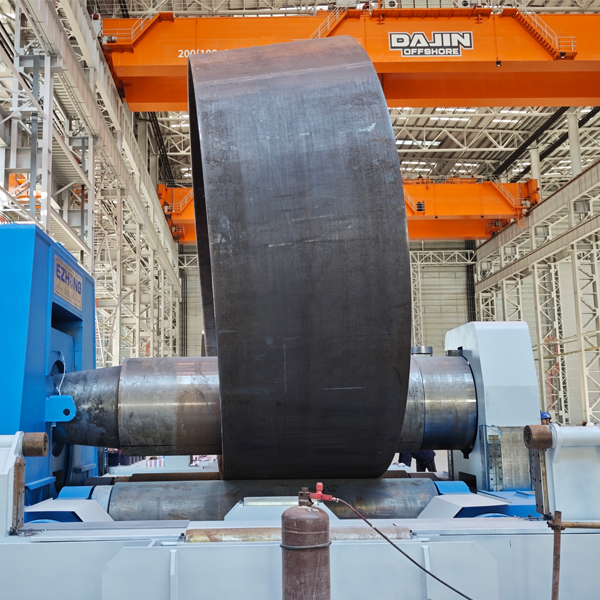
A press machine factory normally publishes the category, the intended application, and the support it offers, while model-level values live in project documentation. EZHONG's public product material is a useful example of that split: it identifies a hydraulic press machine used in metal forming and mentions factory engineering, technical support, and project quotations. Model-level values such as tonnage, bed size, stroke, daylight opening, and control type arrive through technical documents rather than that summary. The pattern is common in heavy equipment, where the capability statement and the parameter table are separate documents, and the second one shows up when a real project is being specified. The trap is filling those gaps with numbers from another supplier's datasheet or from a generic example found online. Rated tonnage, stroke, and daylight are machine-specific values, and one manufacturer's configuration says nothing about another's. Engineering standards reinforce why the written document matters: organizations such as ASME maintain codes and standards precisely because technical details, test methods, and documentation conventions need to be explicit and traceable. So when a hydraulic press manufacturer's published summary stops at the category level, the useful next step is a technical document or a project conversation covering the actual forming job — material grade, blank thickness, part geometry, tooling, and required force.
Specifications are easier to read once you know which question each field answers. Tonnage and force ratings describe capacity and trace back to pressure acting on cylinder area. Stroke, daylight, bed size, speed, and control method describe the working envelope and the motion inside it. Values that are absent belong to technical documents and project discussions rather than to guesswork. With that map in hand, a datasheet becomes a way of seeing what a machine can be asked to do — and which details still need confirming for a particular forming job.
A: Start with the force group, because rated tonnage tells you the capacity ceiling the frame and hydraulic system are built for. Then move to the space group: stroke, daylight opening, and bed size define whether a workpiece and its tooling physically fit. Speed and control method come last and describe how the motion is planned and repeated. Reading the groups in that order keeps a single large number from dominating the comparison.
A: They measure two different things. Daylight opening is the clear height between the ram in its upper position and the bed, so it sets how tall a die set or workpiece can be before the ram even moves. Stroke is how far the ram travels during the working cycle. A press can have plenty of one and too little of the other, which is exactly why both are published.
A: It shows capacity and envelope, which narrows the question considerably. Whether a particular part can be formed also depends on material grade, blank thickness, part geometry, tooling design, and the force that combination requires. The sheet tells you what the machine is built to deliver and how much room it offers; a technical review of those job details confirms the match.
Pascal's Principle and Hydraulics
List of ASME Codes & Standards - ASME
EZHONG Hydraulic Press Machine Listing